
Choosing a business jet cabin
Look beyond seat numbers when comparing business jet cabins, luggage space and layouts.
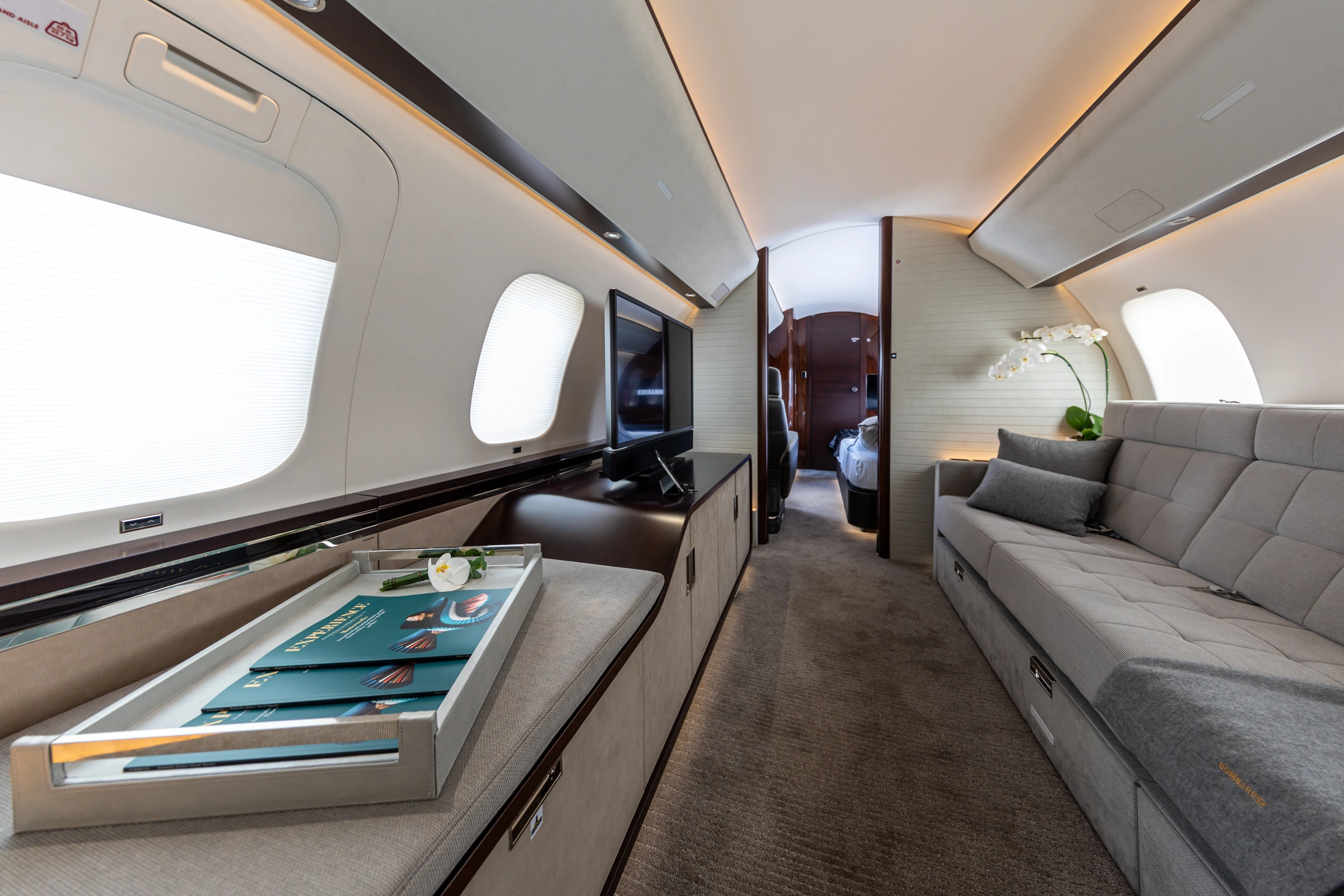
Begin with how you want to spend the flight
Two parties with the same number of passengers may need different cabins. One may want to work together around a table; another may prefer separate places to rest. The best starting point is the experience you need on board.
Consider the longest sector as well as the shorter legs. A configuration that suits a brief regional trip may feel different on an overnight journey. Share those preferences before a shortlist is prepared.
A model name is not an interior specification
An aircraft model identifies a family of design characteristics. It does not guarantee the same seating arrangement, upholstery, entertainment system or connectivity on every individual aircraft. Ask to see the actual aircraft’s cabin information.
Photos in a model directory help you recognise the aircraft type. For a specific charter, the proposal should identify the offered aircraft and its relevant configuration so you can assess the real option.
Include the items travelling with you
Cabin comfort and baggage suitability belong in the same discussion. Count the bags and explain any unusual dimensions. A family trip, a business visit and a skiing holiday can have very different luggage requirements.
If you expect to change passengers or luggage between stops, describe each sector. That avoids assessing the aircraft against only one part of a longer itinerary.
Make a short list of priorities
Choose the few requirements that matter most: a particular seating layout, space to rest, a table, luggage capacity or a preferred aircraft family. Distinguish essential needs from preferences so options can be compared clearly.
Use the fleet directory to explore models from Gulfstream, Bombardier, Dassault, Embraer and Cessna. The individual aircraft and the route remain the basis for the final recommendation.